APPLICATION
Diesel Generator Hybrid Retrofit
Retrofit existing diesel generators with solar PV and battery storage to cut fuel costs by 40-70%.

APPLICATION
Retrofit existing diesel generators with solar PV and battery storage to cut fuel costs by 40-70%.
Upgrade your diesel generator fleet with a hybrid retrofit solution that integrates solar panels and battery energy storage without replacing existing assets. Our retrofit kit works with all major generator brands and can be installed with minimal downtime.
Typical results: 40-70% fuel reduction, 50-80% lower maintenance intervals, and 3-5 year payback period.
| Generator Compatibility | All major brands, 50kVA-2000kVA |
| Solar PV Addition | 50kWp – 2MWp |
| Battery Storage | 100kWh – 5MWh (LiFePO₄/Li-ion) |
| Control System | PLC-based hybrid controller with remote SCADA |
| Installation Downtime | 2-5 days per unit |
| Fuel Savings | 40-70% vs diesel-only |
| Maintenance Reduction | 50-80% fewer service intervals |
| Warranty | 5 years on major components |
Average Fuel Saving
Units Retrofitted
Payback Period
Installation Time

You already have a diesel generator. Maybe several. They’re working, they’re paid for, and replacing them outright is wasteful. The good news: you don’t have to. A hybrid retrofit adds solar PV and battery storage alongside your existing diesel plant.
The diesel keeps running. The solar+battery just takes over a much larger share of the work. Fuel savings are assessed for the specific site. Maintenance extends. Engine life increases. You keep the assets you already own and add the assets that pay back fastest.
Diesel runs 24/7 at variable load. Inefficient at <40% load. Wears out from continuous runtime.
Solar+battery carries daytime load. Diesel runs only when battery low or peak demand. Fuel use is evaluated for the specific site.
Sized to provide 50-80% of your daytime load. Roof-mount, ground-mount, or carport – we work with your site.
Typical: 200kWp – 2MWp
LiFePO₄ batteries sized for your night-time load. Smooths solar variability. Black-starts if diesel fails.
Typical: 500kWh – 4MWh
Bidirectional inverter. Manages solar+battery. Auto-starts diesel on low SoC. Synchs with your existing generator.
Typical: 100kW – 1MW
Energy management system. Optimizes when to use solar, battery, and diesel. Reports savings. Remote monitoring.
Optional: cloud SCADA included

A remote water pumping station running three 400kVA diesel generators in parallel can be retrofitted with solar and storage while keeping the existing diesel as backup. Remote sites with high delivered fuel costs see the fastest payback.
Retrofitted with: 600kWp solar canopy + 1.2MWh battery + 500kW hybrid PCS. Existing diesel kept as backup.
Typical results after retrofit:
A typical retrofit follows these steps over 12-20 weeks:
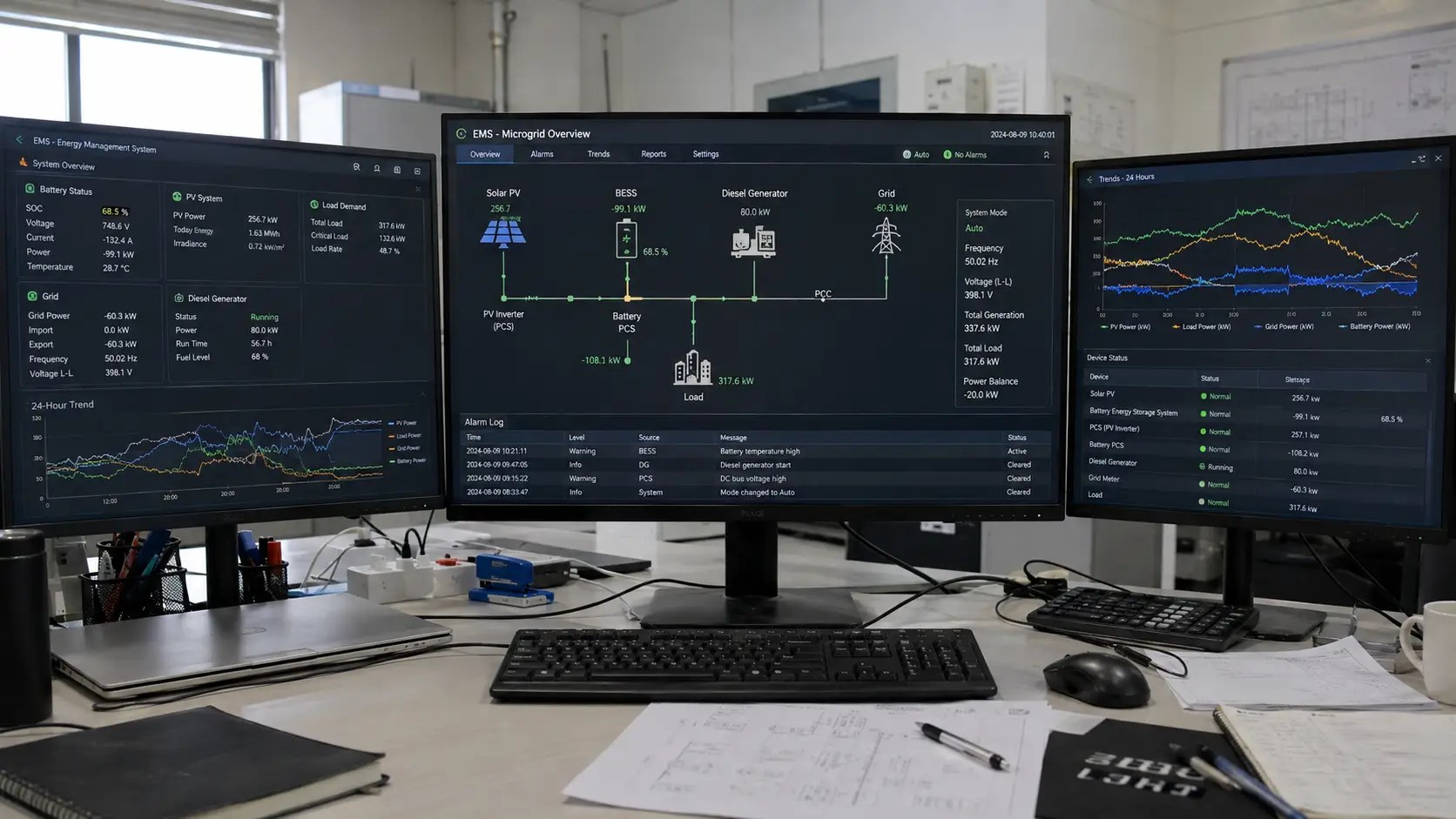
Every retrofit is unique, but most projects encounter a common set of challenges. Here’s how we address them:
It focuses on the genset as the core, wrapping it with PV and storage and controls to convert a dirty baseload generator into a clean hybrid plant.
50 to 70 percent diesel reduction, while extending generator life by lowering run hours and smoothing load.
Yes. Parallel genset fleets are managed as one dispatchable block by the energy management system.
Absolutely. It is designed for off-grid and bad-grid sites, with optional grid-tie when a utility connection becomes available.